Going solar is rarely a single purchase. It is panels, an inverter, storage, mounting, wiring, permits, and years of after-sales support all working together. That is why more Pakistani homeowners now look for one accountable partner instead of stitching a system together from separate sellers. This is where a full-service provider like M-Tech Solar Solutions changes the experience entirely.
In this article we look at what “full service” actually means, why single-point accountability protects your money, and how the quality of your panels sits at the centre of it all. If you have been overwhelmed by conflicting quotes, this is the clarity you have been missing in 2026.
Why M-Tech Solar Solutions Favours a Single-Partner Model
When five different vendors supply five different components, nobody owns the outcome. If output disappoints, the panel seller blames the inverter, the inverter seller blames the wiring, and you are left chasing everyone. Fragmented buying is the number one cause of solar regret.
A full-service model removes that finger-pointing. One partner designs the system, sources matched components, installs to standard, and stands behind the whole thing. That accountability is the quiet advantage of choosing a provider such as M-Tech Solar Solutions rather than a loose collection of traders.
What single-point accountability looks like in practice
- One design owner who sizes panels, inverter, and storage to work as a unit.
- Matched equipment chosen for compatibility, not just the cheapest line item.
- One warranty conversation instead of arguing between suppliers.
- Ongoing support from a team that already knows your system.
The Role of Quality Solar Panels in Pakistan
Even the best installer cannot rescue a system built on weak modules. The panels are your power engine, so their quality sets the ceiling on everything else. Buying reliable solar panels in Pakistan is the foundation a good installer builds on.
Quality shows up in the specification sheet, not the sales pitch. Look at degradation rate, temperature behaviour, and warranty length. A premium module might lose only around 0.4% output per year, while a bargain panel can degrade far faster and leave you short within a decade.
Panel quality checklist
| Quality signal | What to look for | Why it matters |
|---|---|---|
| Annual degradation | Around 0.4% or lower | More power retained over 25 years |
| Product warranty | 12 years or more | Covers physical defects |
| Performance warranty | 25 to 30 years | Guarantees minimum output |
| Tier ranking | Tier-1 manufacturer | Financial stability to honour claims |
How a Full-Service Installer Protects Your Investment
Beyond selling hardware, a serious installer manages the details that make or break long-term performance. These are the steps that separate a professional job from a weekend fit-out.
- Site survey and shading study. Even partial shade on one panel can drag down a whole string, so placement is planned carefully.
- Load and consumption analysis. The system is sized to your real bills, not a generic template.
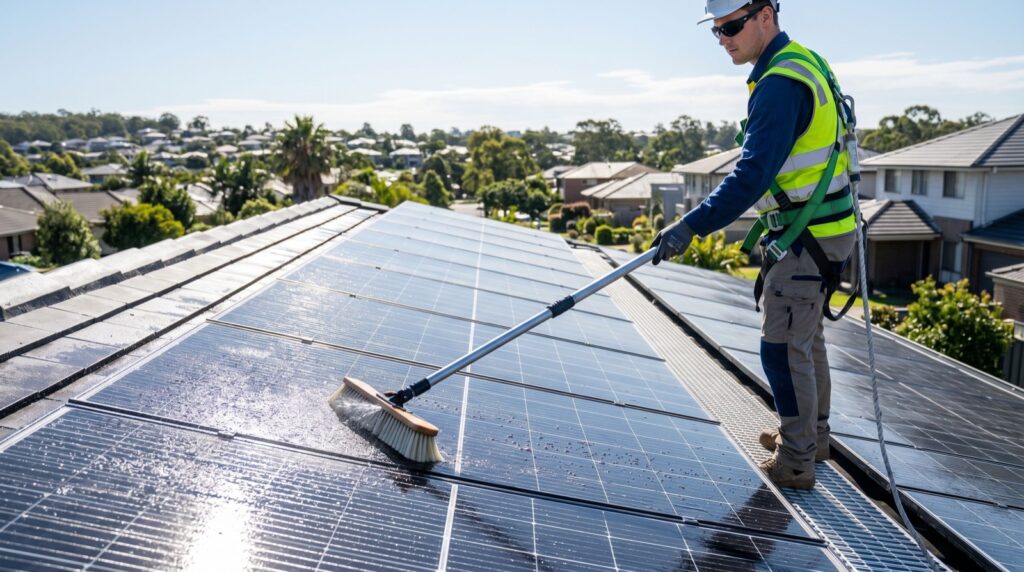
- Compliant installation. Proper earthing, cable rating, and mounting protect against fire risk and weather.
- Net-metering paperwork. A capable team handles approvals so you actually get billing credit.
- Monitoring and maintenance. Remote monitoring flags faults before they cost you power.
These are the safeguards you expect from trusted professionals who treat your rooftop as a 25-year asset rather than a one-off sale.
A lesson from a real installation
We once inspected a home where the owner had bought excellent panels but hired an unrelated crew to install them. Undersized cabling and poor connectors were bleeding energy and creating heat. The panels were blameless; the fragmented process was the fault. A single accountable partner would have caught it instantly.
Comparing Full-Service and Piecemeal Solar Buying
Many buyers still assemble a system from the cheapest parts they can find and hire whoever quotes lowest for labour. On paper it looks thrifty. In practice it shifts every risk onto the homeowner.
The table below shows how the two approaches diverge once the system is actually running. The gaps rarely appear on day one; they surface in year two or three when something needs support.
| Factor | Full-service partner | Piecemeal buying |
|---|---|---|
| Design responsibility | One accountable owner | Nobody owns the whole |
| Component matching | Engineered to work together | Cheapest items, mixed brands |
| Warranty claims | Handled for you | You chase each supplier |
| After-sales support | Team already knows your system | Often none |
The hidden cost of the cheapest quote
A low headline price often hides thin cabling, skipped safety hardware, or unmatched components that shorten equipment life. When you add up repairs, lost output, and warranty headaches, the “cheap” system frequently becomes the expensive one. Value is measured across 25 years, not the first invoice.
Standards and Regulations Worth Knowing in 2026
Grid-tied systems depend on net-metering rules set by the National Electric Power Regulatory Authority. Before committing, verify the latest tariffs and eligibility directly with NEPRA, since these are reviewed from time to time.
On the technical side, guidance from the Alternative Energy Development Board defines the safety and quality benchmarks that credible installers follow. A provider that ignores these standards puts both your warranty and your home at risk.
Frequently Asked Questions
Why choose M-Tech Solar Solutions over separate suppliers?
A single accountable partner designs, installs, and supports the whole system, so there is no finger-pointing if something underperforms. That end-to-end ownership usually delivers better long-term results and a smoother warranty experience.
How do I judge quality solar panels in Pakistan?
Focus on annual degradation rate, product and performance warranties, and Tier-1 manufacturer status. These specification-sheet details predict real-world lifespan far better than the price tag alone.
Does a full-service installer cost more?
The upfront quote can look higher, but matched components, compliant installation, and reliable support typically lower your true cost of energy over the system’s life. Cheap fragmented builds often cost more in repairs and lost output.
What after-sales support should I expect?
Look for remote monitoring, a clear maintenance plan, and a team that handles warranty claims on your behalf. Ongoing support is where a full-service provider proves its value year after year.
Conclusion: Buy the Outcome, Not Just the Hardware
Solar is a long-term relationship, not a shopping trip. The homeowners who stay happy for decades are the ones who chose a single accountable partner and insisted on quality modules from the start. By pairing dependable solar panels in Pakistan with the design and support of M-Tech Solar Solutions, you buy the outcome you actually want: reliable, lower-cost power for years to come. Ready to work with one team that owns your results? Book a full-service consultation today.